

Have you ever felt that sudden jerk and woken up in the middle of a lecture? Maybe it happened when you went to school sleep-deprived or after a series of night shifts. Maybe it even happened to a driver you were traveling with. This common occurrence is a medically reviewed phenomenon and even has a name — Microsleep. While microsleep events happen thousands of times every minute across the world, microsleep is nothing to be taken lightly. Let’s look deeper into the symptoms, causes, dangers, and treatments of microsleeps.
What is Microsleep?
As the name suggests, microsleep refers to a short duration of sleep. This usually lasts for less than 30 seconds and occurs when a person gets fewer than 7 to 9 hours of sleep.
Patients that are micro-sleeping aren’t aware they’re doing it. However, the phenomenon is characterized by the multiple episodes of microsleeps that occur close together. During this, the person tries to stay awake but keeps falling asleep. The person might be tired from a long day, have sleep disorders, a health issue, or simply be drowsy from a lack of sleep.
Another characteristic of micro-sleeping is the rapid switching of the person’s brain from awake to asleep mode. Here’s what the National Institute for Occupational Safety and Health (NIOSH) says: “A sleep-deprived person cannot control the onset of microsleeps and often is unaware that they are occurring.”
Microsleep activity is also detectable on ambulatory EEG. NIOSH also says there is a strong correlation between microsleep and car accidents. While the estimates from National Highway Traffic Safety Administration show a link between drowsy drivers and 6,000 fatal car accidents every year.
But what exactly happens in the brain during microsleeps? When you go for a long period of sleep deprivation, your body collects deposits of adenosine, nitric oxide, and more substances that are known to put sleep pressure on your brain and body. Ultimately the pressure gets so difficult that you have a microsleep episode.
The events have been commonly associated with those such as ‘mind blanking’ and ‘mind-wandering.’ In all these events, the brain falls asleep or loses consciousness for a few seconds and regains quickly. However, during this brief period, certain parts of the brain are still active. This is one explanation of why sensory stimuli might be perceived differently during microsleep.
Additional research shows a connection between pupil dilation and microsleep. This data should be taken into account with the research showing an increase in neural activity with the closure of the eyes triggered due to drowsiness.
Microsleep episodes can also cause the brain waves to slow down. This can be measured using an EEG also known as an electroencephalogram. It has also been observed that brain activity during microsleep is very different from that during regular sleep.
For example, the brain emits slower theta waves during microsleep, faster alpha waves during wakefulness, and delta waves during deep sleep. This can be studied and observed using functional magnetic resonance imaging (fMRI).
Certain parts of the brain that are inactive during regular sleep are active during microsleep. The brain also alters its response mechanisms and reaction time when micro-sleeping. These points aren’t conclusive. However, they do suggest there is a big difference between regular sleep and microsleep.
Symptoms of Microsleep
Symptoms of microsleep may get worse based on the period microsleep has been occurring for and include:
If you find yourself with any of these symptoms then make sure to check in with a medical professional and get the medical advice, diagnosis, or treatment you need.
Dangers of Microsleep
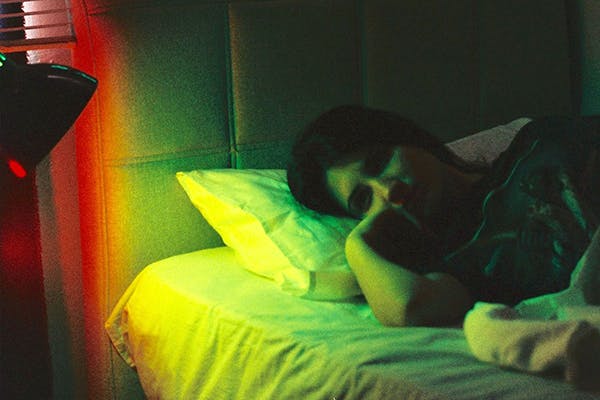
Microsleep can be very dangerous, as the brain completely shuts off during those few seconds. Unlike regular nap time or nighttime sleep, microsleep can occur when the person is eating, driving, or sitting in a classroom.
In this sense, microsleep is only dangerous depending on the situation in which it occurs. A child falling asleep in a classroom can be funny or punishable but less likely to result in serious consequences.
However, some other situations can. The biggest risk of microsleep is when you're out on the roads driving drowsy while experiencing microsleep. Drowsy driving can cause fatal crashes on the road. Driving sleep-deprived can be a threat to public safety workers, pedestrians, a fellow driver, or a passenger
Some professions in which micro-sleeping can be dangerous are:
Microsleep and Sleep Deprivation
The main causes of microsleep are not that difficult to guess - it is primarily caused by a lack of sleep. Sometimes, even a single night without sleep (of 4 hours or less) could result in sleep deprivation.
Sleep deprivation is more common than you may have thought. Even those who think they are sleeping well might not be getting the required amount of sleep required to combat sleep deprivation.
That isn’t to say sleep deprivation is the only cause of microsleep. There are several factors from physical diseases to mental disorders that could cause microsleep tendencies in a person.
Some of the more common reasons include tension, stress, and schedule changes that don't need a doctor’s appointment. A rare disease or psychological condition, however, might require medical intervention.
Other Things That Contribute to Microsleep Episodes
One study from the National Library of Medicine found driving-related car accidents increase when the night shift workers did not get enough sleep the night before. In the same study, those doing the shift work had zero driving accidents after a good night’s sleep.
It is also common to see microsleep occurring in people who have a regular sleeping schedule. Boredom or monotonous activity in healthy adults, for example, could also make them sleepy during the daytime. Benzodiazepines, epilepsy drugs, heart medications, and antihistamine medicine can induce excessive daytime sleepiness.
Effects of Sleep Deprivation
We know all about the dangers of microsleep and the causes of sleep deprivation. Let’s also take a look at the effects of sleep deprivation:
Sleep deprivation could also cause you to get into fatal crashes when on the road.
When Do Microsleep Episodes Occur?
Microsleep episodes can occur at any time of the day. However, most episodes occur in the afternoon. The condition is also referred to as a post-lunch dip or afternoon slump. Another window of time is early morning or late night.
Monotony can also trigger sleepiness. Monotony can be experienced while driving down open roads, riding an airplane or train, sitting in a waiting room, doing repetitive or stationary work - most of us have experienced microsleep episodes in these scenarios.
In contrast, microsleep episodes for night shift workers occur early in the morning when they’re getting off of work.
How Much Sleep is Required by Adults and Children?
As per the medically reviewed data from the National Sleep Foundation, newborns need 14 to 17 hours of sleep. Infants need 12 to 16 hours and toddlers 11 to 14 hours. Preschoolers need a healthy 10 to 13 hours of sleep.
At the age of 6 and up to 18 years old, 9 to 12 hours should be enough sleep. Adults need at least 7 hours of quality sleep every night. Less than 7 hours means more microsleeps and poor health.
However, these numbers are rarely followed, with current data showing that at least for adults in the United States, healthy sleep hours are hard to come by.
Diagnosing Microsleep
A multiple sleep latency test (MSLT) can help doctors diagnose microsleeps. It is a test that can measure a person's tendency to fall asleep but under controlled conditions. However, the test is more commonly used for diagnosing narcolepsy and idiopathic hypersomnia.
That is where medically reviewed psychological, speech, and behavioral tests come in. There are also other ways of diagnosing microsleep that we’ve discussed through the article. These include:
Diagnosing Sleep Deprivation
There is little uniformity in the medical field over the testing of sleep-related problems. That said, sleep deprivation symptoms can be seen long before episodes of microsleep start to show. However, the initial symptoms remain the same. Such as:
One telltale sign is falling asleep within minutes of hitting the bed. Typically, five minutes or less. In serious conditions, the doctor will conduct a sleep study called polysomnography. Such conditions/ symptoms include:
Treatment for Microsleep and Sleep Deprivation
Treatments for sleep deprivation aren’t always the same for every person. Treatment may differ based on the severity of the disorder, progression of illness, and its cause.
Often the condition is not even considered a disorder so getting treatment for a lot of patients might be delayed. However, here are some treatments that can help you manage the episode better:
Prevention of Microsleep
While curing microsleep can be a complicated issue, preventing it is much simpler and can be done by following some of these tips:
Prevention of Sleep Deprivation
Things to avoid
Things to do
Manage Sleep Deprivation
What you do before you go to bed can make a huge impact on your quality of sleep. Certain activities are known to help make the person feel relaxed and make it easier for them to fall asleep as well. Activities such as:
You can also try to get plenty of movement during the day to keep yourself fresh and active. Medical data shows exercise can help you combat daytime sleepiness and sleep better at night.
Conclusion
Overall, the thing to remember is sleep deprivation and microsleeps aren’t all that different. One is the cause while another is the symptom, though it can be hard for a person to diagnose it by themselves.
If you see some of these symptoms or think you’re having episodes of microsleep, consult a medical professional. Only a medical professional can give you reliable advice, diagnosis, or treatment. They can also confirm whether a medically reviewed medicine is actually useful or dangerous to your health.
Now, we know there are plenty of over-the-counter medications for sleep disorders. But why put your health at risk when you only need to get a good rest at night? Sandland Sleep brings you a natural sleep medicine.
Our fast-acting and long-lasting sleep aid herbal supplements are made from neutral hemp-derived ingredients. So, you can cash in on some sleep with 100% safety and without relying on harmful supplements or drugs.


